Natural Herbs to Treat E. coli Safely
Herbs for E. coli
Virtual Doctors Africa understands that E. coli infections can be distressing, causing diarrhea, stomach cramps, nausea, and fatigue. While medical care is essential for severe cases, certain natural herbs can support gut health, reduce symptoms, and help the body recover. Using herbal remedies responsibly can complement treatment and promote overall digestive wellness.
What is an E. coli Infection?
Escherichia coli (E. coli) is a bacteria naturally found in the intestines. Some strains are harmless, but pathogenic E. coli often contracted from contaminated food, water, or poor hygiene can cause gastrointestinal infections. Symptoms include diarrhea, abdominal cramps, vomiting, and sometimes fever. In severe cases, certain strains can lead to kidney complications.
While mild infections often resolve naturally, herbs with antibacterial and anti-inflammatory properties can support recovery and relieve discomfort.
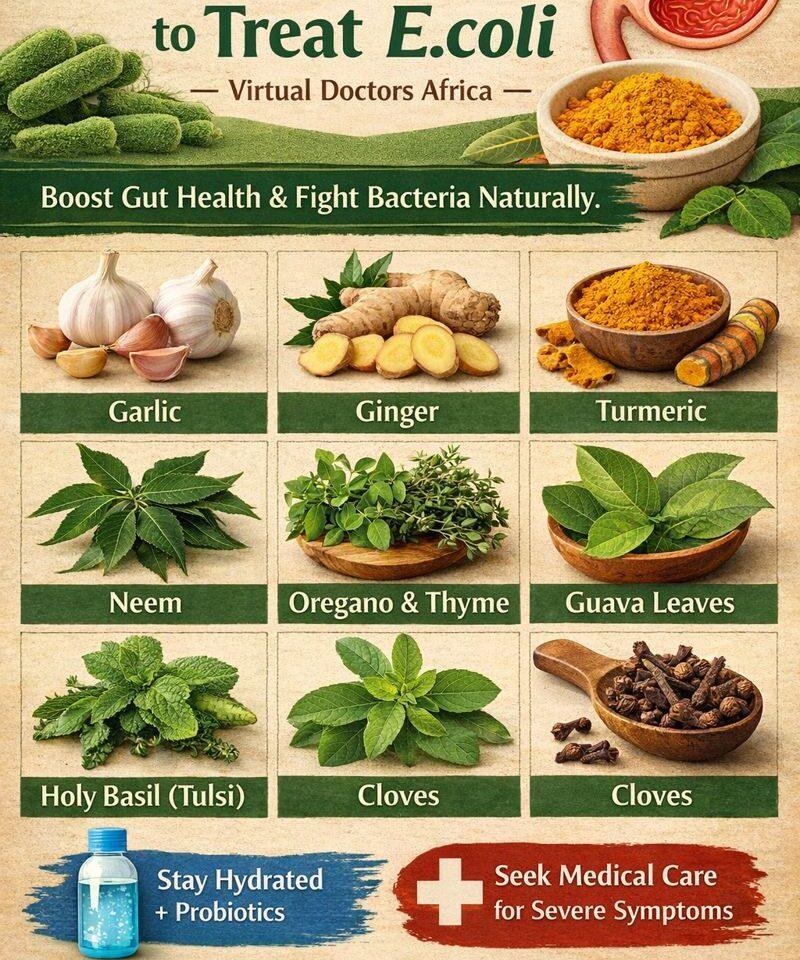
Top Natural Herbs for E. coli Infections
1. Garlic (Allium sativum)
Garlic is renowned for its antibacterial properties due to its active compound allicin, which can inhibit the growth of harmful bacteria, including E. coli.
How to use:
-
Eat 1–2 cloves of raw, crushed garlic daily.
-
Incorporate garlic into soups, stews, and herbal teas.
Tip: Avoid excessive use if you have ulcers or digestive sensitivities.
2. Ginger (Zingiber officinale)
Ginger has antimicrobial and anti-inflammatory benefits. It helps soothe the gut, reduce cramps, and may inhibit bacterial activity.
How to use:
-
Boil fresh ginger slices in water for 5–10 minutes to make a calming tea.
-
Add ginger to meals or smoothies to aid digestion.
3. Turmeric (Curcuma longa)
Turmeric contains curcumin, a compound with antibacterial and anti-inflammatory properties. It helps reduce gut inflammation and supports the immune system in fighting infections.
How to use:
-
Mix ½ teaspoon of turmeric powder in warm water or milk.
-
Add a pinch of black pepper to increase absorption.
-
Incorporate turmeric into cooking for a natural, long-term digestive support.
4. Neem (Azadirachta indica)
Neem is a traditional African and Asian herb used for its broad-spectrum antibacterial effects. It may help reduce E. coli growth and support the body’s immune response.
How to use:
-
Prepare neem leaf tea by boiling a few fresh leaves in water.
-
Drink once or twice daily for short-term use only.
Caution: expectant women should avoid the use of neem.
5. Oregano and Thyme: Herbs for E. coli
Oregano and thyme are rich in carvacrol and thymol, which have strong antibacterial effects. They are particularly useful in controlling bacterial growth in the gut.
How to use:
-
Brew fresh or dried oregano and thyme leaves into a tea.
-
Use herbs in cooking to naturally enhance flavor and digestive support.
-
Oregano oil can be used in tiny diluted amounts but requires caution.
6. Guava Leaves
Guava leaves are traditionally used for diarrhea and intestinal infections. They contain natural antibacterial compounds that may reduce fluid loss and help fight E. coli.
How to use:
-
Boil 4–5 fresh guava leaves in a cup of water for 10 minutes.
-
Drink warm tea up to twice daily.
7. Holy Basil (Tulsi)
Tulsi, also known as holy basil, is an immune-boosting herb with antibacterial properties. It can help the body fight infection and support gut health.
How to use:
-
Steep a few tulsi leaves in hot water for 5–7 minutes to make tea.
-
Drink once or twice daily during recovery.
Supportive Practices for E. coli Recovery
Herbs work best alongside hydration and probiotics. Drinking plenty of water, coconut water, or oral rehydration solutions prevents dehydration from diarrhea. Probiotics in yogurt or fermented foods restore healthy gut bacteria disrupted by E. coli infections.
Safety Tips: herbs for E. coli
-
Herbal remedies should not replace medical treatment for severe infections.
-
Seek immediate care for blood in stool, high fever, persistent vomiting, or dehydration.
-
Some herbs, like neem or concentrated oregano oil, can be too strong for children, dexpectant women, or sensitive individuals.
-
Always use herbs moderately and under guidance when necessary.
At Virtual Doctors Africa, we advocate safe, informed use of natural herbs to complement recovery from E. coli infections. Garlic, ginger, turmeric, neem, oregano, thyme, guava leaves, and tulsi are effective options for reducing bacterial activity, soothing the digestive tract, and promoting overall gut health. Combined with hydration, probiotics, and professional medical care when needed, these herbs can support natural recovery and enhance well-being.
Download the Virtual Doctors Africa app on Google Play to get started: https://play.google.com/store/apps/details?id=ng.virtualdoctors.app
Herbal remedies are not a replacement for proper medical attention, especially for severe E. coli infections, but when used responsibly, they offer a powerful tool for holistic health. By embracing natural healing under guidance, individuals can manage mild infections effectively and support long-term digestive wellness.